


Indonesian Global Health Foundation (IGHF) or Yayasan Global Sehat Indonesia was built to improve health equity, especially in limited-resource settings or rural areas in Indonesia.
We focus on taking an approach to address the problem of health inequality in Indonesia by providing innovative solutions, donations for those who need it the most, doing health promotion, building health and social project initiatives, and gathering voices from the field related to global health challenges and initiatives in Indonesia.


Boards

ANA MARIANA
Chief Executive Officer

DWITA
Chief Operating Officer

MARWA
Chief Medical Officer


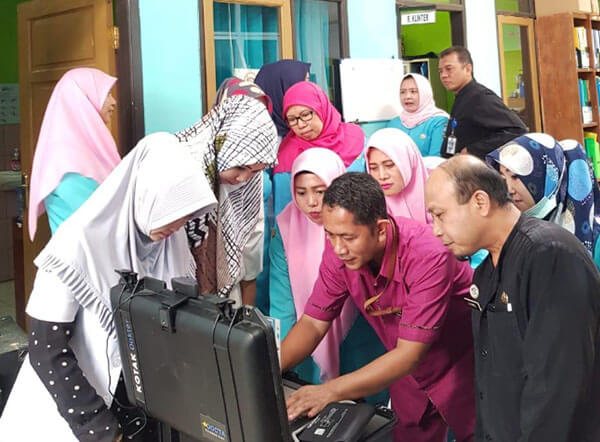


According to the WHO, an estimated 287,000 of maternal death happened in 2020 globally, and about total of 48,000 cases of maternal death occurred in Central and Southern Asia (WHO, 2023). The Indonesian Ministry of Health reported 4,627 maternal deaths in 2020, and 7,389 maternal deaths in 2021, with 2,982 of those deaths due to COVID-19 infection (Kemenkes, 2021).

Neonatal Mortality in the World and Indonesia. According to UNICEF, around 18 babies died in their first months of life among 1000 live births in 2021. Based on the data from the Indonesia Ministry of Health, the neonatal mortality rate was 16.85 deaths per 1000 life births in 2020 (National Survey, 2020)

Inadequate Nutrition leading to Stunting problem in Indonesia. Indonesia Nutrition Surveillance System (SSGI) in 2022 estimates that although the numbers have decreased since 2013, the prevalence of stunting remains high. In 2022, it was still 21.6% across 33 provinces of Indonesia, reduced by 2.8% from the previous year. West Java is one of the islands with a high prevalence of stunting, which was 20.2% in 2022.
Services
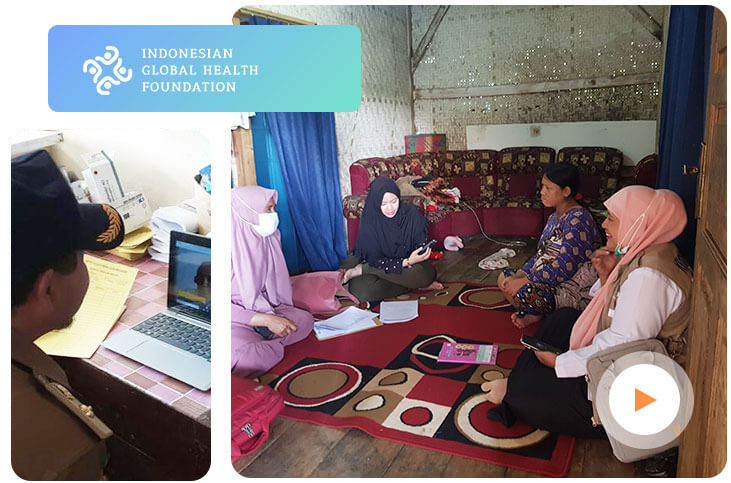
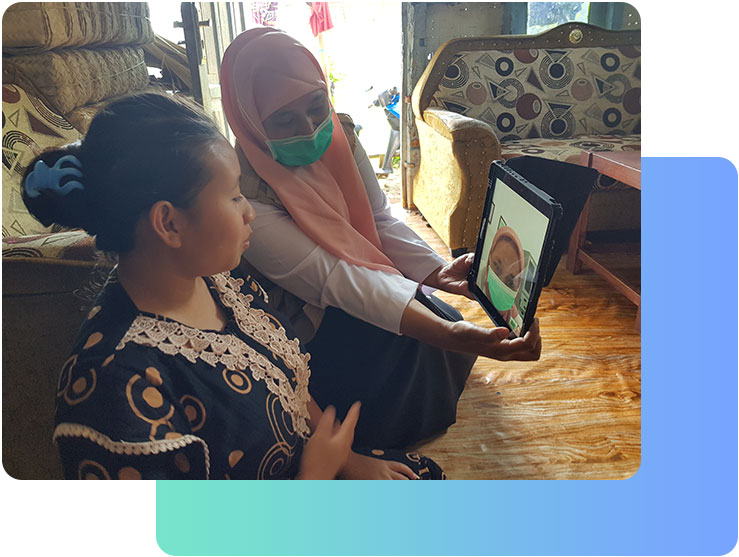
We provide a telemedicine device for patient or pregnant women who live in the rural area by connecting residents in rural areas with doctors, and midwives or nurses, both with online communication. Our telemedicine services could improve rural maternal care by allowing pregnant women to see doctor online even if they live in an area where there are no doctors practicing locally.
” We make all of the innovation work to give more value to improve health outcome and enhance health equity “